Tea for Sleep: The 7 Teas Worth Brewing (With Real Evidence)
Anxious before bed → chamomile. Slow to fall asleep → valerian, with patience. The test matches the tea to your night.
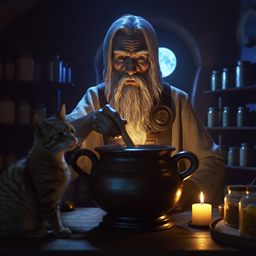
Updated Jul 10, 2026
✓ 60-day guarantee — if the Map tells you nothing of your own, full refund
Find YOUR night tea
The Natal Map of the Body
It finds your weak hour — and why. It tells you what holds each season. 26 pages. Your name on every one.
This page is everyone's map. YOUR Map brings your complete night ritual: your tea from your answers, YOUR hours from your chronotype, and what to do in every season of the year. 26 pages, yours forever.
An astrology + naturopathy consultation: $80–150 · the Map at opening: $19
forged one at a time — the bruxo writes each Map alone, start to finish
You came through the remedies door — so the Map opens on your nights first, herb by herb.
Get my Map — $13.40Secure checkout by ClickBank — card or PayPal. Your Map lands in your inbox within 24 hours.
Not medical advice. For personal reflection and well-being. Astrology is presented as declared tradition — never as science. These herbs support rest; they do not diagnose, treat or cure any disease.
This is how a Map is born
These are pages from a Map already forged — someone else's, with their name on it. Yours will speak of you: your hours, your body, your seasons.
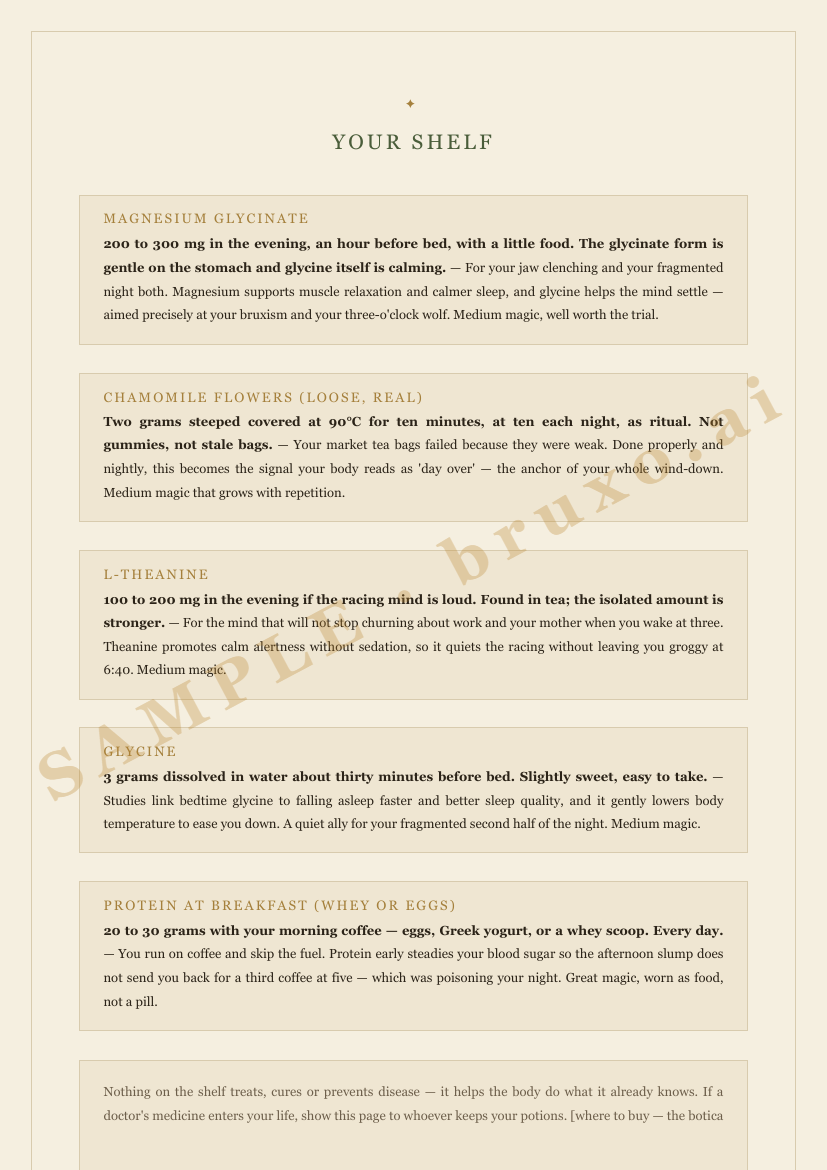 26 pages — yours will speak of you
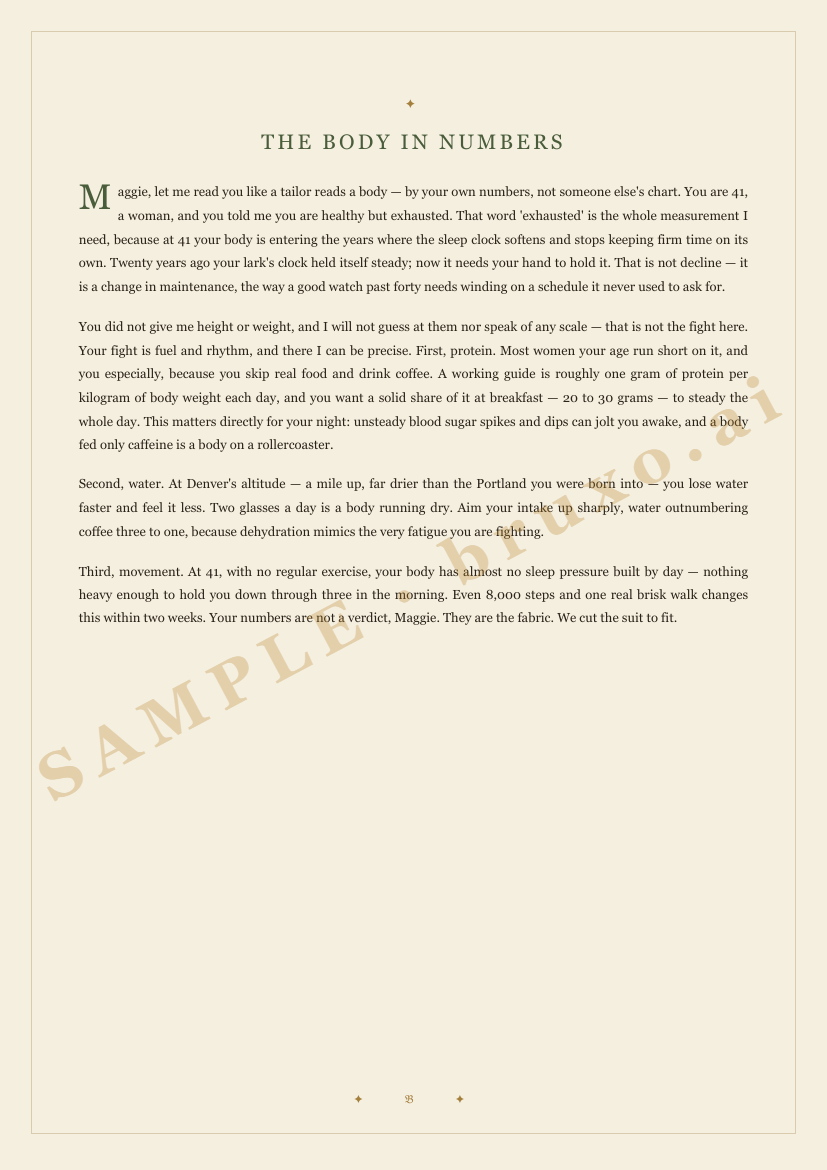 26 pages — yours will speak of you
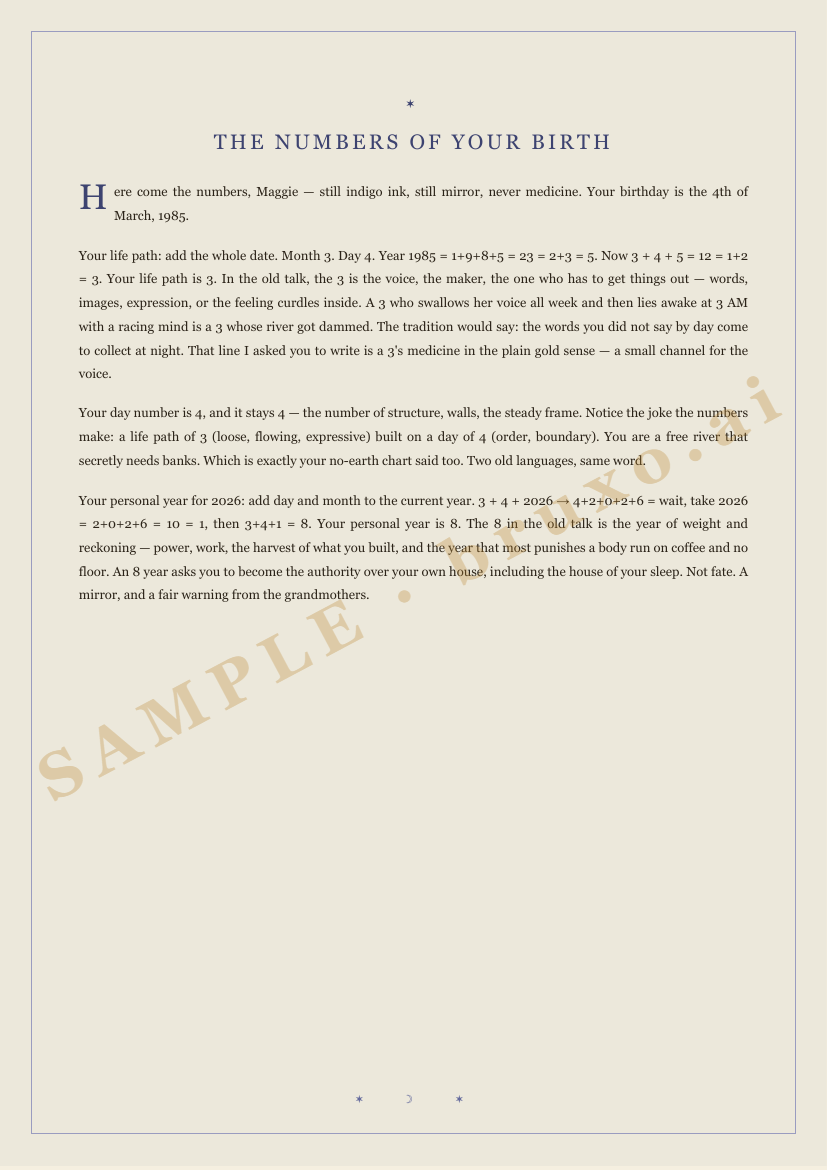 26 pages — yours will speak of you
Tap the first two to look closer. The rest stay veiled: they belong to whoever ordered them.
There is no such thing as "the best tea for sleep." There is the right tea for YOUR kind of night. The person who lies there spinning after lights-out needs one herb; the person who falls asleep fast but snaps awake at 3am needs another; the person who arrives at the pillow with a racing heart needs a third. Of the dozens of herbs tradition calls "calming," seven have either published evidence or a tradition so long it earns a card — and those seven are what this page is about.
The mechanism, in plain words: some of these plants carry compounds (apigenin in chamomile, valerenic acid in valerian) that talk to the same brain receptors pharmacy sedatives touch — the GABA receptors — just with a much lighter hand. Others work through a second, equally real channel: the ritual. A warm drink, same time every night, tells the body the day is over. Both count. None of them "cures" anything: tea supports rest, it does not treat disease.
On this page you will find: the test to discover your tea, the 7 cards (dose in grams, steeping minutes, when to drink and when NOT to), a glance-table to compare, and the doors tea does not open — those belong to your doctor.
Chamomile's most cited study: a randomized, double-blind, placebo-controlled trial in people with mild-to-moderate generalized anxiety — chamomile extract reduced symptoms significantly versus placebo over 8 weeks. The candidate compound is apigenin, which binds GABA-A receptors. (Amsterdam 2009, Univ. of Pennsylvania — search PubMed)
Tradition says — and it is tradition, not science — that chamomile was one of the nine sacred herbs of the Saxons, and that the Egyptians offered it to the sun for cooling the day's fever. The end-of-day herb, since forever.
You already bought the "sleepytime" tea at the store. Nothing happened.
Bag in the mug, thirty seconds of dunking, two sips while scrolling. That is how almost everyone drinks it — and that is why almost nobody feels anything. A standard tea bag holds roughly 1 gram of finely chopped herb. The studies that showed an effect used 2 to 3 grams, in hot water, steeped 10 minutes with the cup COVERED — because the calming oils are volatile: in an open cup, the medicine leaves with the smell.
Meaning: the problem is almost never the tea. It is which tea and how. A valerian tried for one night "didn't work" — because it needs two to four weeks. A watery 30-second chamomile "didn't work" — because it was not a dose. The right question is not "does tea work?" It is "which herb, at what dose, for which kind of night — YOURS?"
The 7 teas, one by one — the apothecary cards
Each card keeps the two inks apart: in gold, what science has measured (with the source next to it, or the honest "smoke magic" seal when there is no study). In indigo, the herb's legend — declared as legend, never sold as proof. And the exact brew, in grams and minutes, because "a little handful" is not a dose.
I tried all seven, one week each, before writing this. Honestly: bagged chamomile did nothing for me — it only worked with 3 grams of loose flowers and the cup covered. Valerian smells like old socks (I will not lie to sell herbs) and on night one, nothing; by night ten, I had forgotten what my alarm sounded like. But the one that put ME down was passionflower — I am a 4am waker, and with it my sleep started holding through. Your case may be different. That is why this page has a test instead of one answer.— the bruxo, from the apothecary
1 · Chamomile
⚗ great magic
Gold: randomized controlled trial in generalized anxiety: chamomile extract beat placebo over 8 weeks; apigenin binds GABA-A receptors. Honesty requires saying it: the study used capsule extract — the tea carries the same flower at a smaller dose. (search PubMed)
☾ Declared legend: sacred herb of the Saxons, offered to the sun by the Egyptians.
When NOT: allergy to ragweed/daisy-family plants; on blood thinners (warfarin), ask your doctor first; in pregnancy, only with medical sign-off.
2 · Passionflower
⚗ middling magic
Gold: the most direct study done with actual TEA: double-blind crossover, one cup nightly for a week improved subjective sleep quality versus placebo. Small (n≈41), but it was the cup, not a capsule. (Ngan & Conduit 2011 — search PubMed)
☾ Declared legend: missionaries saw the instruments of Christ's Passion in the flower — hence "passion flower."
When NOT: pregnancy and nursing, no. If you take prescription sedatives or anxiolytics, do not stack without a doctor — sedation adds up. No driving after.
3 · Valerian
⚗ middling magic
The fact nobody tells you: valerian does NOT work on night one. The effect shows up with nightly use, between week 2 and week 4. Quit on day three and you quit right before it started.
Gold: systematic reviews point to a modest, subjective sleep improvement across uneven studies; the trials with prolonged use (2–4 weeks) are the ones that show the effect. (search reviews on PubMed)
☾ Declared legend: they say the Pied Piper of Hamelin carried valerian in his pocket — cats and rats follow it as if bewitched.
When NOT: never with alcohol or with sedatives/anxiolytics. Pregnancy and nursing: no data, so no. And the smell: honest as I am, it smells like old socks. The bruxo does not lie.
4 · Lemon balm
⚗ middling magic
Gold: small studies with standardized extract reported less agitation and better sleep in stressed people; in the lab it raises GABA activity. Small studies, some without placebo — middling, not great. (search PubMed)
☾ Declared legend: "melissa" is Greek for "bee" — it was planted by the hives so the bees would never abandon the house. The herb of staying.
When NOT: if you treat your thyroid (levothyroxine), ask your doctor — lemon balm can interfere. With sedatives, the usual rule: never stack without sign-off.
5 · Lavender
⚗ middling magic
Gold: lavender's strong evidence is for the oral oil and for aromatherapy (anxiety trials); for the TEA itself there is less: one trial in postpartum women found less fatigue and better mood with daily lavender tea. The cup works two channels: what you drink and the steam you smell. (search PubMed)
☾ Declared legend: a sprig under the pillow, they said, would bring the face of your future love into your dreams.
When NOT: among the gentlest. In pregnancy, like all of them, with sign-off. If the perfume taste bothers you, blend with chamomile.
6 · Linden
☁ smoke magic
Gold (said with the house's honesty): tradition very strong, science thin. Lab and animal studies suggest a calming effect (GABA pathway), but good human trials are missing. The apothecary declares it: here the proof is weak — what is strong is the memory of a thousand kitchens. (search PubMed)
☾ Declared legend: the council tree — European villages gathered to decide under the linden. A tree that calmed even arguments.
When NOT: frequent heavy use is discouraged with heart conditions (an old caution in the literature); pregnancy, with medical sign-off.
7 · Rooibos + the night blend
☁ smoke magic
Gold: rooibos has no proof of making you sleepy — it has honest arithmetic: zero caffeine, from birth. If your afternoon carries black tea, green tea or coffee after 4pm, swapping to rooibos removes a real saboteur. As the base of a night blend (rooibos + chamomile + a pinch of lavender), it carries the herbs that DO have proof. (search PubMed)
☾ Declared legend: the red bush grows only in the Cederberg mountains of South Africa — no other corner of the Earth would it call home.
When NOT: almost no closed doors — which is why it is the cup the bruxo points to for someone expecting a baby, after the doctor confirms.
The glance-table
| Tea | Kind of night | Evidence | Brew | Caution |
|---|---|---|---|---|
| Chamomile | Anxiety before bed | Great magic (RCT 2009) | 2–3 g · 10 min covered | Daisy-family allergy; blood thinners |
| Passionflower | Waking mid-night | Middling magic (tea, double-blind) | 2 g · 10 min · 1 h before | Not in pregnancy; never stack with sedatives |
| Valerian | Taking forever to fall asleep | Middling magic (2–4 weeks!) | 2–3 g root · 10–15 min · nightly | Never with alcohol/sedatives |
| Lemon balm | Racing heart, knotted stomach | Middling magic | 1.5–3 g · 10 min covered | Thyroid: ask your doctor |
| Lavender | Ceremony + aroma seekers | Middling magic (tea: little) | 1–2 g · 5–7 min · smell the steam | Bitter if oversteeped |
| Linden | Heavy end of day | Smoke magic (strong tradition) | 1.5–2 g · 10 min · warm | Heart: frequent use with caution |
| Rooibos/blend | Cutting evening caffeine | Smoke magic (but 0 caffeine is a fact) | 3 g · 5–7 min | Almost none |
The ritual matters as much as the herb
Here is the part the boxes never mention: half the effect of "a tea for sleep" is not in the cup — it is in the repeated gesture. The human body loves predictability. A fixed sequence (dim lights, water on the stove, the same 10-minute wait, the same mug) becomes a signal: the day is over. The brain learns that signal the way it learns your alarm tone — just in reverse.
Consistent pre-bed routines are associated with falling asleep faster and sleeping more continuously — the regularity effect shows up in adults and is one of the most repeated findings in sleep-hygiene research. The warm drink works as the routine's anchor: same hour, same sequence, every day. (search PubMed)
Grandmother never knew the word "circadian." She knew tea is drunk sitting down, with the house already quiet, and that you bless the cup before the first sip. She called it respect. Science called it a signal. Perhaps it is the same thing with two names.
Practical rules of the ritual: a medium cup (200 ml — not a half-liter mug; your bladder will thank you at 3am), thirty to sixty minutes before bed, no screens during the 10-minute steep. Those 10 covered minutes are the start of powering down, not a chore.
When tea is NOT the answer — the doctor's doors
The apothecary has doors it does not open itself. Pregnancy and nursing: most of these herbs were never studied in pregnancy, and valerian and passionflower are advised against — the list travels with you to your OB or midwife, and they are the ones who cross out or approve. Daily medication: herbs are chemistry too; chamomile talks to blood thinners, lemon balm to the thyroid, and any sedative herb STACKS with pharmacy sedatives. You do not pile sedation on your own.
And the signs that ask for a doctor instead of tea: loud snoring with pauses in breathing (that has a name and a treatment), bad sleep for more than three or four weeks straight, daytime sleepiness that wrecks your day, or always waking with your heart pounding. Tea keeps company with ordinary nights; nights that became a health problem belong at a different counter.
People ask me if tea replaces a sleeping pill. I do not know your case — and whoever answers without knowing it is selling, not caring. What I do know: the doctor is the spine of the remedy. I work in front of the shelf; behind it, the doctor is in charge. If you take anything prescribed, the herb conversation starts at the clinic, not at the apothecary.— the bruxo, from the apothecary
The apothecary's creed (why there are no testimonials here)
Notice this page has no "Mary from Ohio slept like an angel ★★★★★." Not because nobody sleeps — because the apothecary does not invent people. The house creed is short: science in gold ink, always with the source beside it, and when the proof is weak the card says "smoke magic" instead of pretending. Legend in indigo ink, declared as legend, because a beautiful story also warms — as long as it does not dress up as a study. And the price on the table: the bruxo prices the Map at $19, holds it at $13.40 for founders, and says so to your face, no fake timer, no "only 3 left." Whoever arrives at 3am running on broken sleep deserves, at minimum, not to be played for a fool.
Questions that reach the apothecary
What is the best tea for sleep?
How long before bed should I drink it?
Does valerian work the first night?
Can I drink sleep tea while pregnant?
Do tea bags work?
From the same shelf
- Melatonin vs magnesium: which of the two is for your night?
- Waking up at 3am: what it can mean (and what to do)
- Folk sleep remedies — the legend shelf, declared as legend
- Birth chart calculator of the body — free
So now you know which tea belongs to which kind of night — and why the hour you pour it matters as much as the cup.
But a page like this can only speak in general — it describes the night, not yours. Which hours run strong in your own body, which remedy fits your constitution — that reading starts from your birth data, and it is the Map of the Body: 26 pages written on your chart alone, yours for good.
The night has been explained. Yours is still waiting to be read.
Open my Map — $13.40Secure checkout by ClickBank · 60-day guarantee · no rush: the apothecary door doesn’t close.